Click HERE to Send E-mail to Deep-Six
Dry suits are designed to keep a diver warmer for a much longer period of time than a wet suit. Actually, having a gas next to the diver's body is what provides the insulation. Wet suits do this by having millions of gas bubbles in the material of the suit. Like a styrofoam cup, the gas bubbles in the suit provide insulation even thought the suit is relatively thin. A dry suit is designed to keep water away from diver's body and replace it with air for insulation. Hence it must be sealed at the neck and wrists (and ankles if there are no boots). It must provide entry through a large opening that is zippered shut with a special zipper that is totally waterproof.
Some dry suits are made of neoprene. They provide insulation in 2 ways: Using the millions of bubbles inside the neoprene and the air that is trapped in the suit. Dry suits that are made of nylon or composite material are quite thin (< 1mm) and the suit provides very little insulation because there are no gases within it. So, the diver would have to wear some sort of clothing under the suit. This undergarment should be capable of trapping a lot of air within it. Thinsulate, fibers, wool, etc. are materials that have a lot of gas spaces and do not have a lot of weight. The more of this underwear the diver wears under the dry suit, the warmer the dive will be. Naturally, there is a limit due to the size of the suit. Also, as one adds gas spaces (more underwear), one will also have to add more weight in order to submerge. Incidentally, most divers that wear the neoprene dry suits also wear undergarments under them especially if they are diving in ice water.
Diving in a dry suit requires much more training than diving in a wet suit. Since there is gas in the suit it compresses as the diver descends and expands as the diver ascends in the water. If this is not compensated for problems may result, some of which are dangerous. As one descends in a dry suit the compression may result in a major squeeze. The suit can compress around the diver making it feel like a gigantic blood pressure cuff. Where there are folds in the suit, the skin is pushed into the fold by the higher pressure blood. The fold then compresses the skin causing blood blisters along the body. If the diver relieves this by adding measured amounts of air to the suit, relief is felt immediately. However, adding air to the suit may cause expansion problems as the diver ascends. If the suit starts to expand, and it is not vented, the diver can go into an uncontrolled ascent possibly resulting in arterial gas embolism and/or decompression sickness.
E-MAIL Deep-Six for the latest, super-reduced SALE price!
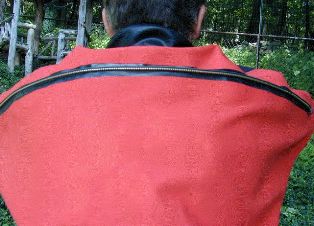
Here is a heavy duty zipper that runs along the shoulders and provides easy entry and a watertight seal.
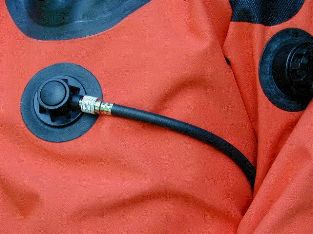
The valve with the hose attached is on the chest of the suit. The entry button swivels to allow the inflator hose to run under the right (preferred) or left arm. When the button is pushed air enters from the tank to keep the suit somewhat inflated as the diver descends. This prevents the suit from squeezing the diver and provides gas for warmth.
The valve on the right sleeve has an automatic dump. As the diver ascends the air in the suit will expand. Air must be vented to avoid the suit from over-inflating, possibly sending the diver into an uncontrolled ascent. This is an automatic valve that can be set to a variety of pressures for relief. So, air is released automatically as the diver goes toward the surface.
There are latex seals at the wrists and neck. They are comfortable and provide a watertight fit. The boots are either latex (for ease of fin entry) or heavy-duty, and may be used to walk over rough terrain without fear of puncture. Sandals or a larger type of shoe should be worn over the latex boots when walking on land.


A separate hood especially made for dry suit diving is available. This is a standard 5 mm wet suit hood but it has a smaller bib to avoid having it interfere by floating up in the diver's face or up the back of the head. The neck is designed to lay over the dry suit's latex neck seal.
It is important to remember that your suit is designed for environmental protection only and is not to be used for buoyancy control. It is also very important that you properly weight yourself for neutral buoyancy so that when you expel all the excess air from the suit you do not sink.
If you are an experienced drysuit diver, make a few training dives to familiarize yourself with the system and to learn how much air and weight you need for a comfortable dive. If this is your first drysuit or are new to a shell style suit, take a drysuit class from your local training facility or make at least 10 to 12 training dives with a competent, trained drysuit instructor to become completely comfortable with your drysuit diving skills. DO NOT attempt to make normal "Fun" dives until you are totally familiar with your new suit and confident in your new diving skills.
Shell Care
Your shell is primarily nylon with a waterproofing layer physically bonded to the inside. After use, the material should be rinsed in clean, fresh water. The dirt or grime can be washed off with a mild soap and a soft brush. The inside of the suit should be cleaned also, to remove perspiration and body oils. DO NOT hang your suit in the sun to dry as this damages the material and causes leaks. Allow the shell to air dry, perform seal and zipper maintenance and roll the suit for storage. To roll the suit, lay it with the zipper open and facing the floor. Begin rolling from the feet towards the neck. When your suit is rolled up to the neck, fold the arms/zipper over the roll and the suit is ready to be stored in the suit bag (optional).
Seal Care
Seals are made to exacting specifications of the finest materials available, but are still subject to deterioration if not cared for as follows: Wash the rubber with a mild soap and water solution to remove all contamination from body oil, pollution, lotions, etc. Apply silicone to the cleaned rubber. Insure that you are using a food grade silicone grease, oil or spray. NOTE: Applying silicone to a contaminated seal will only trap the contaminants and accelerate the deterioration.
Store the suit rolled up, in a bag to minimize the air flow around the seals. This allows the silicone to protect the rubber longer.
New neck or wrist seals may feel tight or a little restrictive at first but will relax with use. It is possible to pre stretch your seals by inserting a soda bottle into the neck and/or wrists while soaking the rubber with liquid silicone. This should make the seals feel more comfortable. Contact your dealer if you still need any additional sizing or trimming.
Zipper Care
While operating the zipper, care should be taken to insure that no dirt or foreign material is trapped at the sealing surface that could cause a leak or dislodge a tooth. Zipper teeth are to be cleaned regularly using a soft bristle brush and mild soap. Lubricate the outside of the teeth using Silicone Wax. Do not use silicone spray, grease or oil on the zipper teeth as it will attract and hold dirt and accelerate wear damage at the rubber's edge. Apply lubricant to the inside of the teeth in the same manner as the outside. Firmly grasp the zipper teeth between two fingers and squeeze while drawing your hand the length of the zipper. This does two things ...it forces the lubricant between the teeth where it does the most good it and removes the excess lubricant. Apply a small amount of silicone grease or oil on the zipper fabric between the teeth and the seam. This helps protect the rubber of the fabric and keeps it from discoloring the surrounding material. Store the zipper completely open and do not close it until the suit is on and ready to use. Sliders should operate smoothly and easily. If binding does occur STOP! DO NOT FORCE THE SLIDER!! Reopen the zipper; inspect; clean and lubricate as necessary.
Undergarments
The right undergarment with a proper fit is the key to warm diving and buoyancy control. If your Undies are too large, you should consider having them tailored to remove excess material. Don't use cotton (T-shirt, sweats, shorts, etc.) under your garment. The cotton material does not wick the moisture away from your skin and you will feel a chill as you perspire. Your undergarments will need periodic cleaning to remove perspiration and body oils. You can machine wash with regular laundry soap (no bleach) and hang or tumble dry on low/cool setting. Air drying is the preferred method since the dryer causes the fleece material to "Pill" faster, plus the warmth of the machine tends to tighten the weave of the fabric temporarily making the undergarment tighter fitting.
Click HERE to Send E-mail to Deep-Six
Call: 845-255-7446